What Are Aligners?

Clear aligners may look like simple transparent trays, but clinically they function as a precise biomechanical system delivering controlled orthodontic forces over time.

The real difference lies in how that system is designed, customized, and executed.
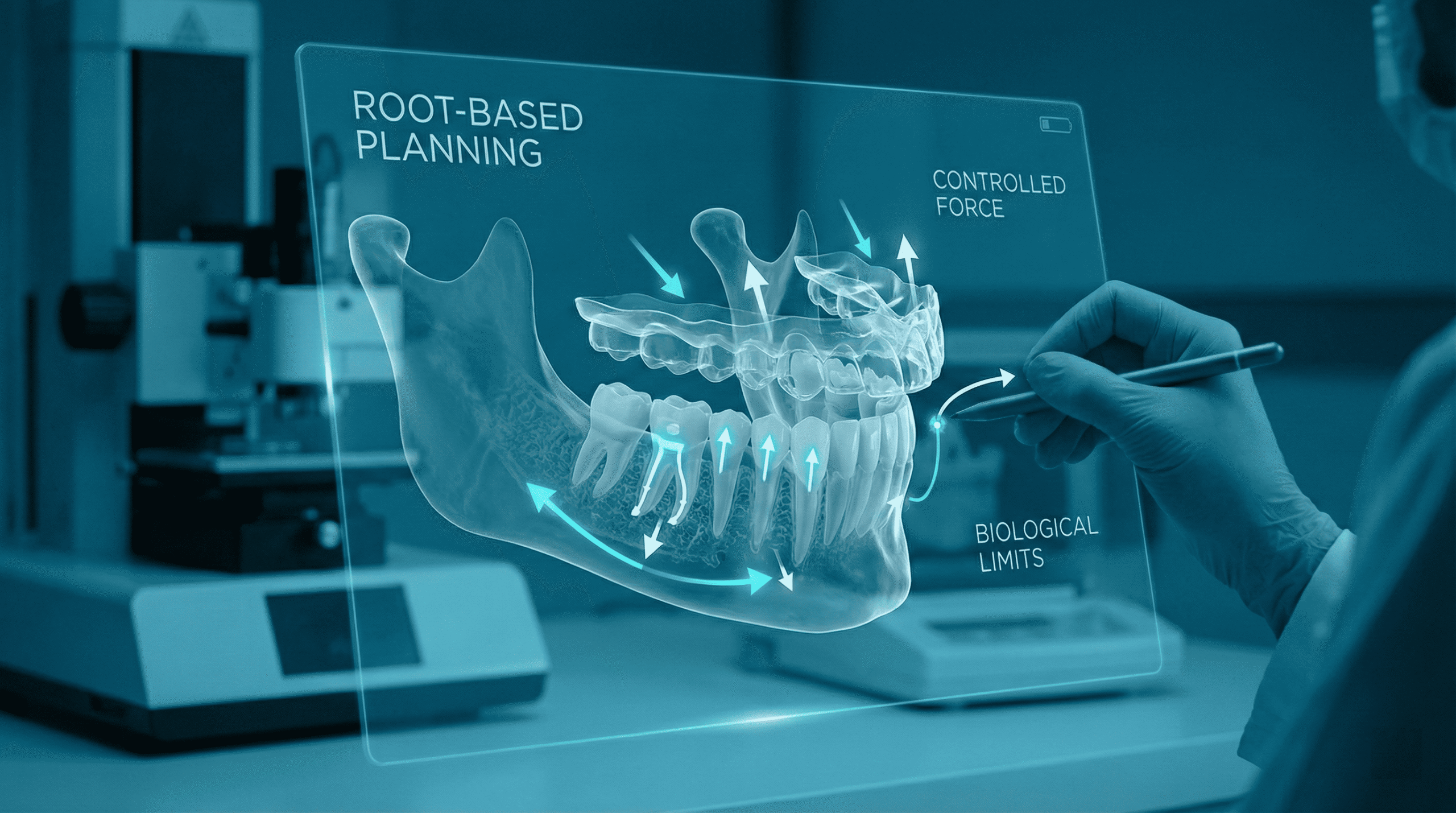
Fully Customized TPR Protocol with Stage-Specific Material Control

We believe aligners are not the treatment itself — they are one component within a complete digital orthodontic system.

  • Force magnitude and direction
  • Force duration and decay
  • Root movement within bone boundaries
  • Available space and proper staging
  • Periodontal tissue response
Our Process

How myline Aligners Work: A Clinically Structured Workflow

Step 1 – Clinical Consultation

Treatment begins with a licensed dentist or orthodontist evaluating the case. Records typically include:

  • Intraoral scans or impressions.

  • X-rays or CBCT (when indicated).

  • Intraoral and extraoral photographs.

 
Goal: Determine case suitability and biomechanical complexity.

Step 2 – Treatment Planning

Using clinical records, a custom aligner plan is developed, defining:

  • Movement sequence.

  • Force strategy.

  • Space management (IPR, expansion, staging).

  • Biological limits of movement.

 
The digital setup is a clinical hypothesis, not a guarantee.

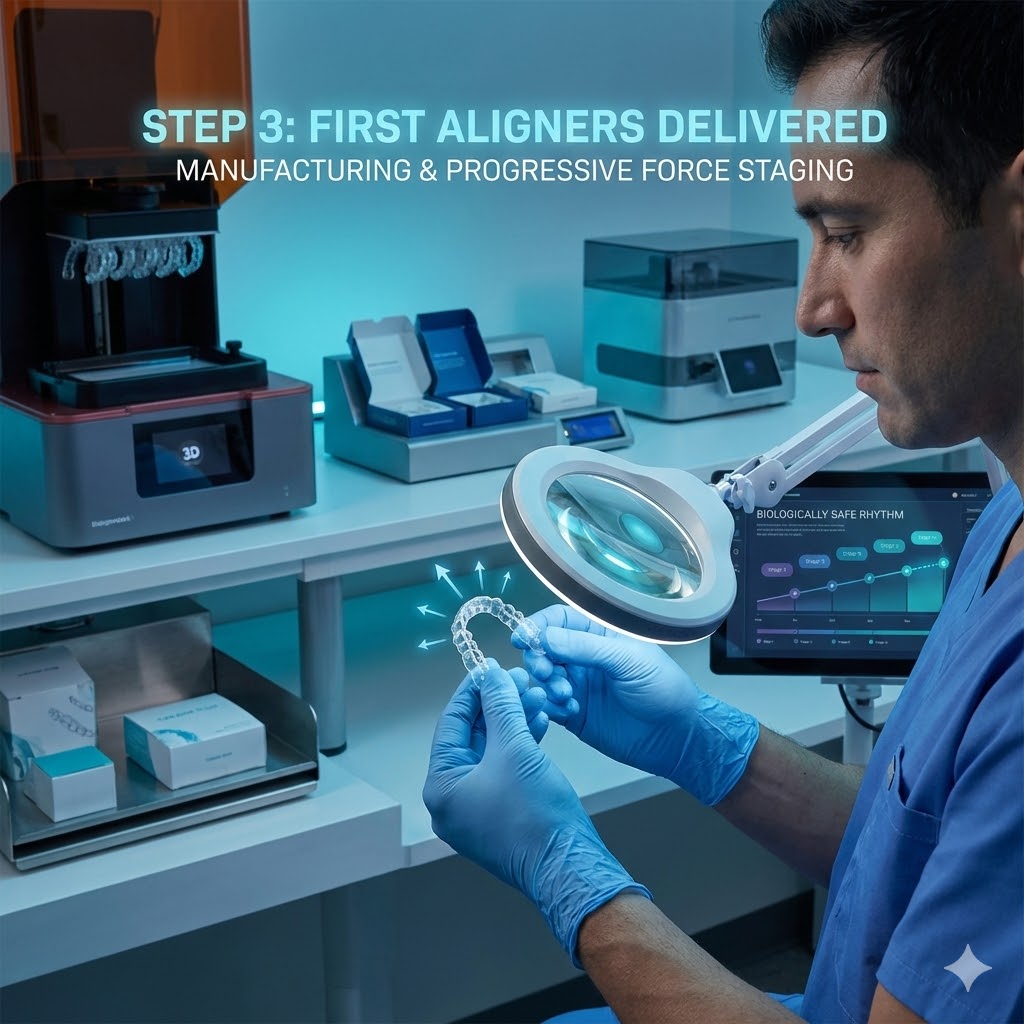
Step 3 – First Aligners Delivered

After plan approval, the first series of aligners is manufactured. Each aligner is designed to:

  • Apply specific force patterns.

  • Stage the teeth for the next movement.

  • Maintain progressive, controlled motion.

 
Wearing time per aligner follows a biologically safe rhythm, not arbitrary cycles.

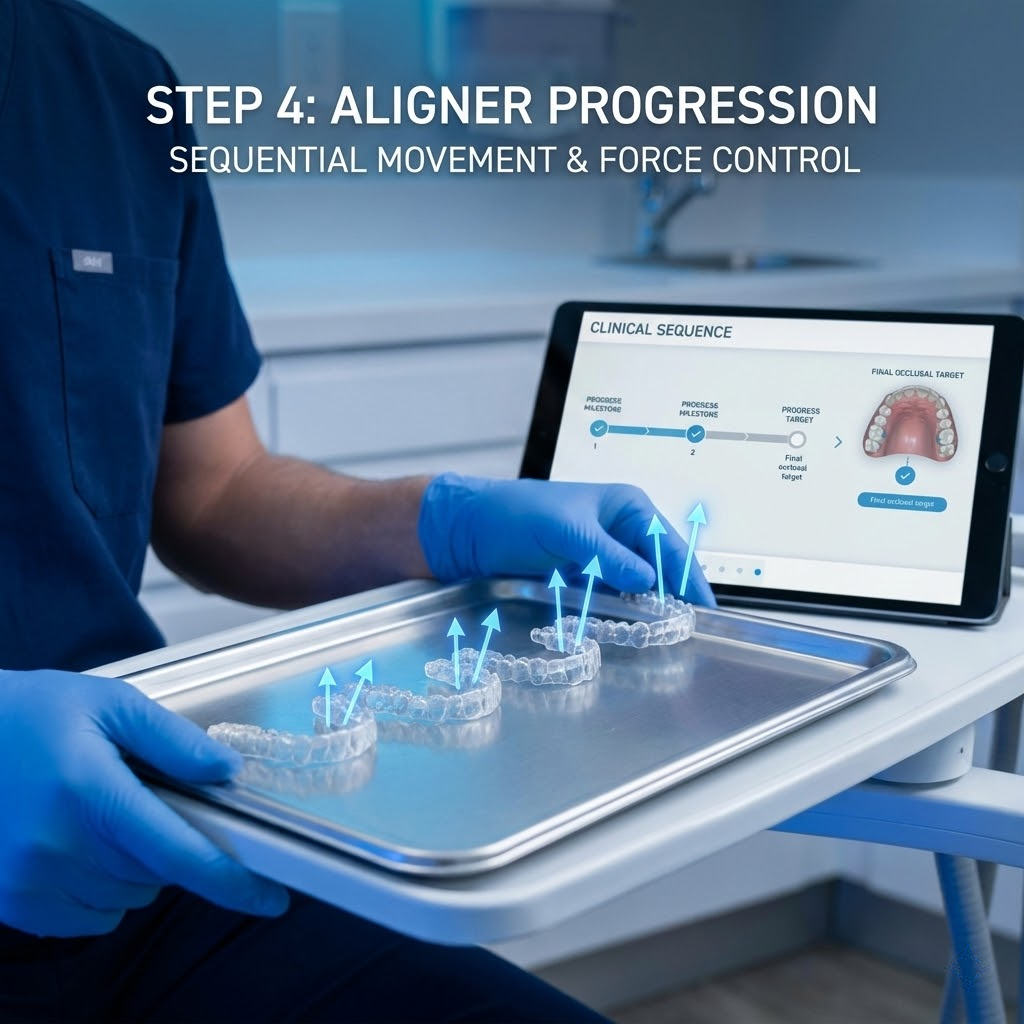
Step 4 – Aligner Progression

As the case advances, aligners are changed according to the clinical sequence. Each aligner:

  • Builds upon prior movement.

  • Adjusts force magnitude and direction.

  • Progresses toward the final occlusal target.

Predictable treatment requires consistent wear and planned force control.

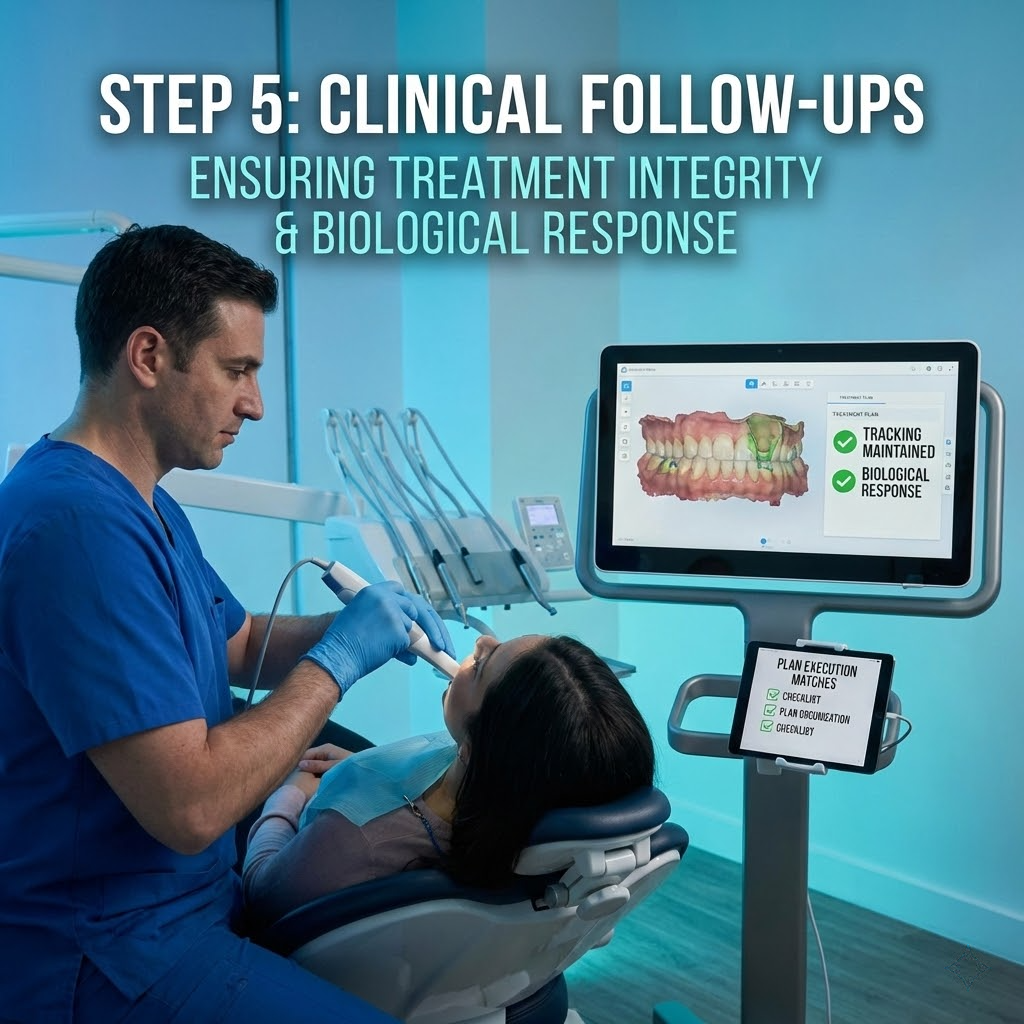
Step 5 – Clinical Follow-Ups

Routine check-ins ensure:

  • Tracking is maintained

  • Biological response is within expectations

  • Plan execution matches the clinical design

  • Adjustments are made only when necessary

 
This phase safeguards treatment integrity.

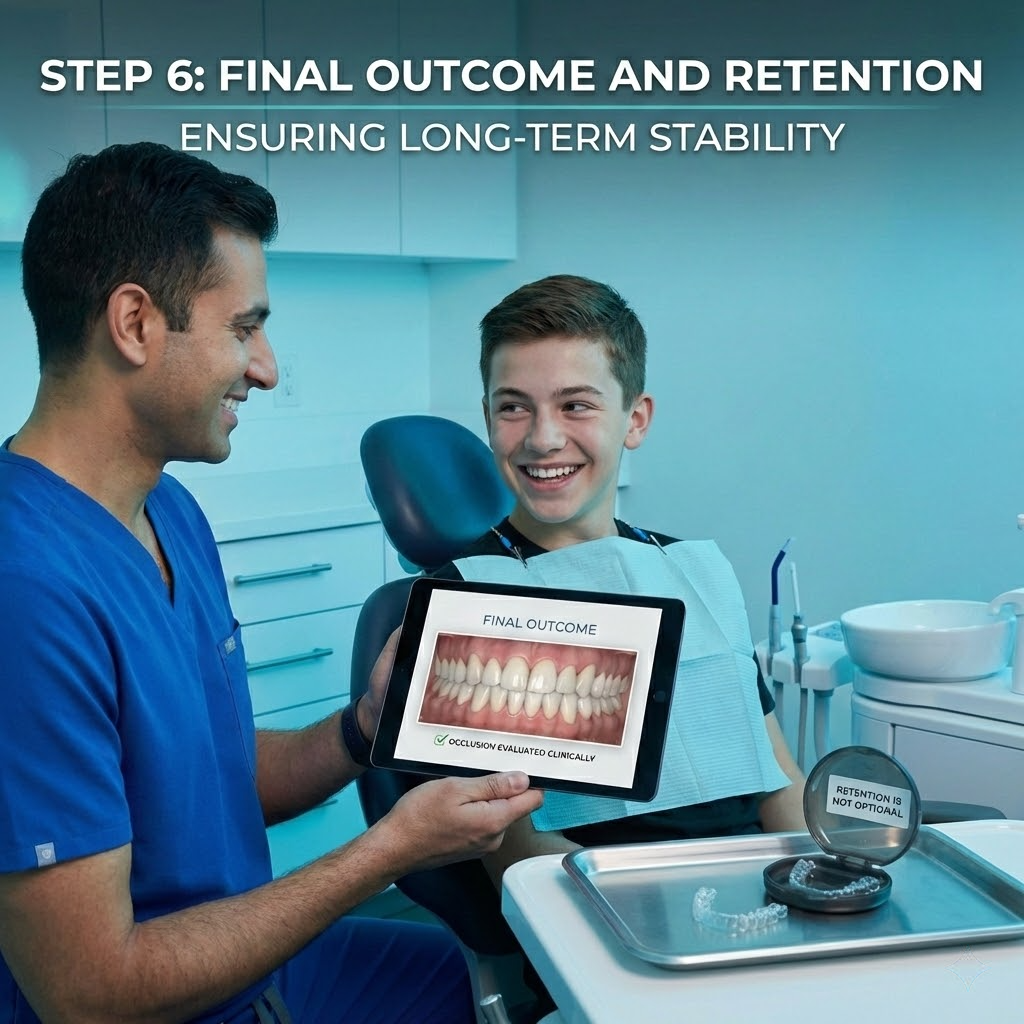
Step 6 – Final Outcome and Retention

Once movements are complete:

  • Teeth are positioned as planned

  • Occlusion is evaluated clinically

  • Retainers are prescribed to maintain outcomes

 
Retention is not optional—it is the final clinical phase, ensuring long-term stability.

Aligners don’t move teeth on their own.

Good planning Precise force control Sound clinical judgment does.