
Mind the Gap! How to Fix Diastema for a Confident Smile
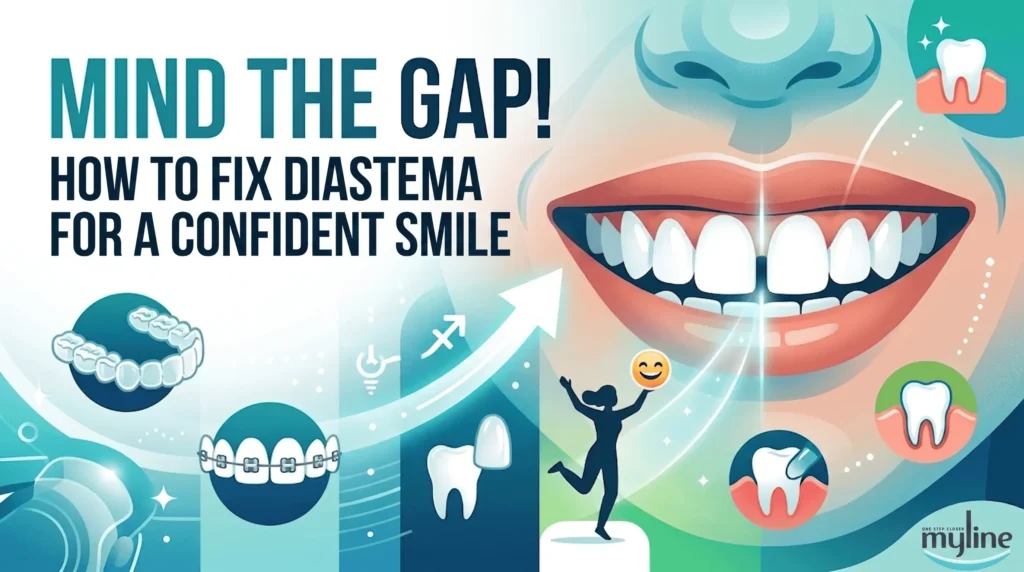
A diastema refers to a visible space between two teeth, most commonly seen between the upper front teeth. While in many cases it is a harmless anatomical variation, it can sometimes affect smile aesthetics, speech articulation, and long-term oral stability.
In modern dentistry, diastema is no longer considered only a cosmetic concern. It is often a clinical sign that reflects underlying biological, functional, or developmental factors that should be properly evaluated before choosing a treatment approach.
Understanding the cause of the gap is the first step toward achieving a stable, predictable, and long-lasting result.
Understanding Why Diastema Occurs
Diastema does not develop from a single cause. Instead, it is usually the result of multiple interacting biological and functional factors.
Tooth–Jaw Size Discrepancy
One of the most common causes is a mismatch between tooth size and jaw dimensions. When teeth are proportionally smaller than the available arch space, gaps naturally form between them.
This type of spacing is often seen in patients with otherwise healthy dentition and is primarily an orthodontic alignment issue rather than a disease-related condition.
Missing Teeth and Space Redistribution
Tooth loss—whether congenital or acquired—can lead to space redistribution within the dental arch. Adjacent teeth may drift or tilt into unsupported areas, creating visible gaps.
If not managed early, these spaces may increase over time due to continuous orthodontic forces within the oral environment.
Periodontal and Gingival Factors
Gum health plays a critical role in tooth stability. Periodontal disease can lead to bone loss and reduced support for teeth, which may result in drifting or spacing.
In some cases, gingival enlargement or abnormal tissue attachment can also influence tooth positioning and contribute to diastema formation.
Functional Habits and Muscular Forces
Certain oral habits can apply continuous low-grade pressure on teeth over time. These include tongue thrusting, thumb-sucking, or abnormal swallowing patterns.
Although subtle, these forces are repetitive and can gradually alter tooth position, especially in younger patients whose dentition is still developing.
Genetic and Developmental Influence
Genetics also plays a significant role in spacing patterns. Some individuals naturally inherit smaller teeth, larger jaws, or spacing tendencies that appear across family members.
In these cases, diastema is a structural variation rather than a pathological condition.
Clinical Significance of Untreated Diastema
Although diastema is often perceived as purely aesthetic, leaving it untreated can have functional consequences depending on its cause and severity.
Open spaces between teeth may increase food impaction, which can contribute to plaque accumulation and difficulty in maintaining optimal oral hygiene. Over time, this may increase the risk of gingival inflammation.
In addition, untreated spacing may allow gradual tooth migration, especially when underlying functional or periodontal factors are present. This can lead to progressive changes in bite balance and smile symmetry.
Early evaluation allows clinicians to distinguish between stable and progressive cases, ensuring more predictable long-term outcomes.
Treatment Options for Diastema Closure
The treatment of diastema is highly dependent on the underlying cause, the size of the gap, and the patient’s aesthetic expectations. A correct diagnosis is essential to ensure long-term stability.
Clear Aligners
Clear aligners are a highly controlled orthodontic option used to gradually close spaces by applying staged, biomechanically guided tooth movement. They are particularly suitable for patients seeking a discreet and minimally invasive approach.
When properly planned, aligners can achieve precise space closure while maintaining overall occlusal balance.
Fixed Orthodontic Braces
Braces remain one of the most effective solutions for moderate to complex spacing cases. They allow full control over tooth movement in all directions, making them suitable for cases that require comprehensive correction beyond simple space closure.
Dental Veneers
Veneers are a restorative aesthetic option used when diastema is associated with small tooth size or shape discrepancies. They can close visible gaps while simultaneously enhancing tooth proportion and color.
However, veneers address appearance rather than underlying tooth position.
Dental Bonding
Composite bonding is a conservative and fast aesthetic solution for minor diastema cases. It involves applying tooth-colored material to close small gaps and improve symmetry.
While effective for immediate results, long-term stability depends on proper case selection.
Periodontal Treatment
If periodontal disease is contributing to tooth mobility or spacing, gum therapy must be addressed first. Stabilizing the supporting structures is essential before any orthodontic or cosmetic intervention.
Without periodontal control, any closure treatment may lack long-term stability.
Why Early Intervention Improves Outcomes
Early diagnosis and intervention play a crucial role in managing diastema, especially in younger patients.
When spacing is addressed at an early stage, treatment tends to be simpler, more conservative, and more predictable. Early management can also help prevent secondary complications such as progressive tooth migration, speech adaptation issues, or worsening periodontal conditions.
In growing patients, early orthodontic evaluation allows clinicians to guide development rather than correct established problems later.
A Modern Approach to Diastema Management
Today, diastema treatment is no longer limited to closing gaps. The focus has shifted toward understanding why the gap exists and designing a treatment plan that ensures long-term biological and functional stability.
Modern orthodontics integrates digital planning, biomechanical analysis, and patient-specific factors to deliver more predictable outcomes.
At myline, we approach every case as a fully customized system rather than a standardized procedure. Each treatment plan is designed based on biological response, biomechanical requirements, and aesthetic goals.
This allows us to move beyond simple gap closure toward complete smile harmony.
Close the Gap. Restore Function. Elevate Confidence.
Diastema is a common and highly treatable condition when properly diagnosed and managed. With modern orthodontic and cosmetic solutions, gaps can be closed safely while improving both function and aesthetics.
The key to success is not only choosing the right treatment—but understanding the biological reason behind the gap.
At myline, we design personalized orthodontic systems that go beyond aligners—because every smile deserves a treatment built around it.
Ready to close the gap and achieve a more confident smile? Book your myline consultation today.