What Are Aligners?
Clear aligners may look like simple transparent trays, but clinically they function as a precise biomechanical system delivering controlled orthodontic forces over time.
The real difference lies in how that system is designed, customized, and executed.
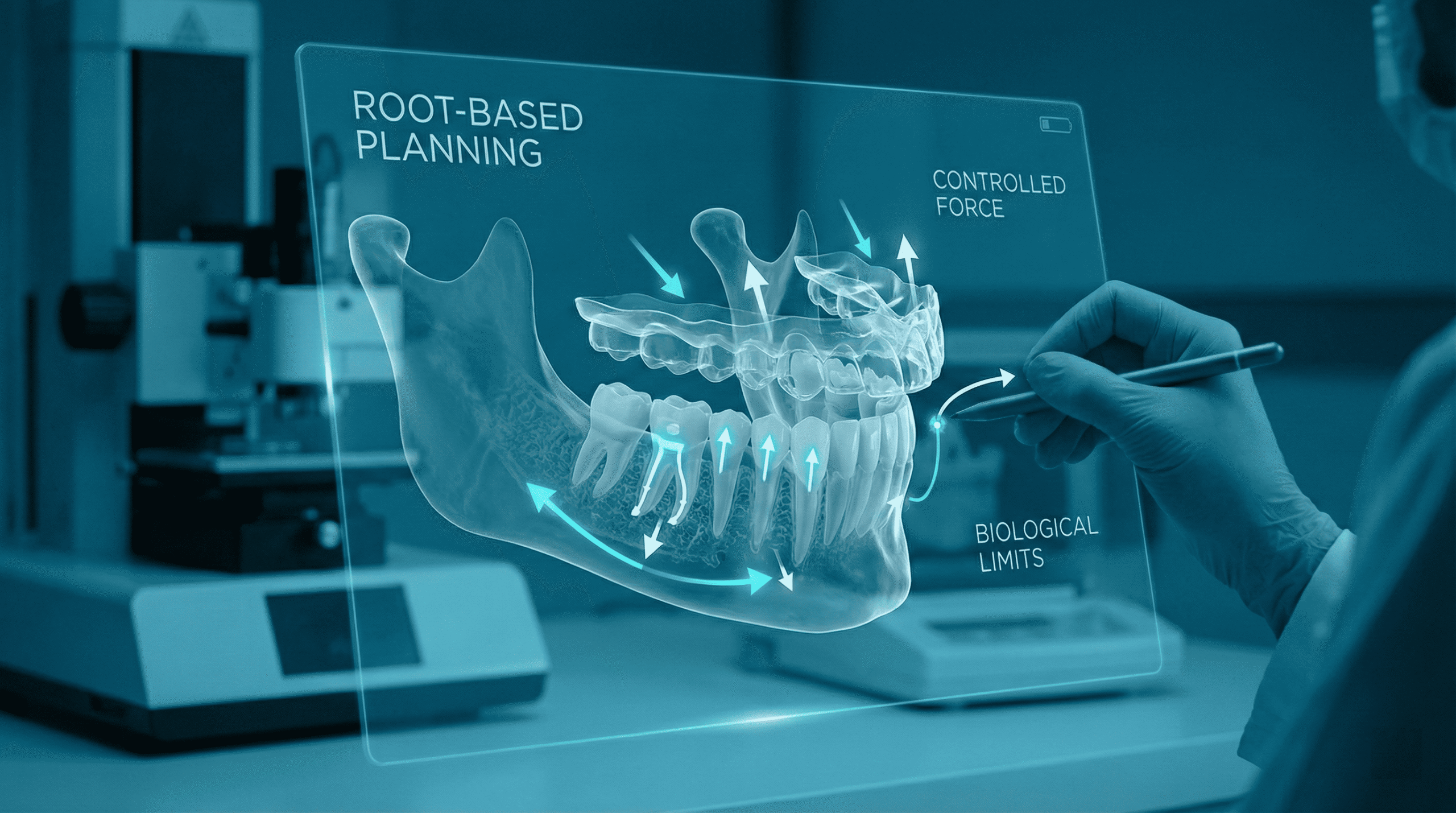
Fully Customized TPR Protocol with Stage-Specific Material Control
We believe aligners are not the treatment itself — they are one component within a complete digital orthodontic system.
-
Force magnitude and direction
-
Force duration and decay
-
Root movement within bone boundaries
-
Available space and proper staging
-
Periodontal tissue response
What Makes myline Aligners Different
myline aligners are engineered to execute clinical treatment plans, not just simulate them digitally.
We don’t aim to generate fast setups.
We aim to deliver predictable execution.
ENGINEERED FOR CONTROL
Core Properties of myline Aligners
Our Process
How myline Aligners Work: A Clinically Structured Workflow
-
Step 1 – Clinical Consultation
-
Step 2 – Treatment Planning
-
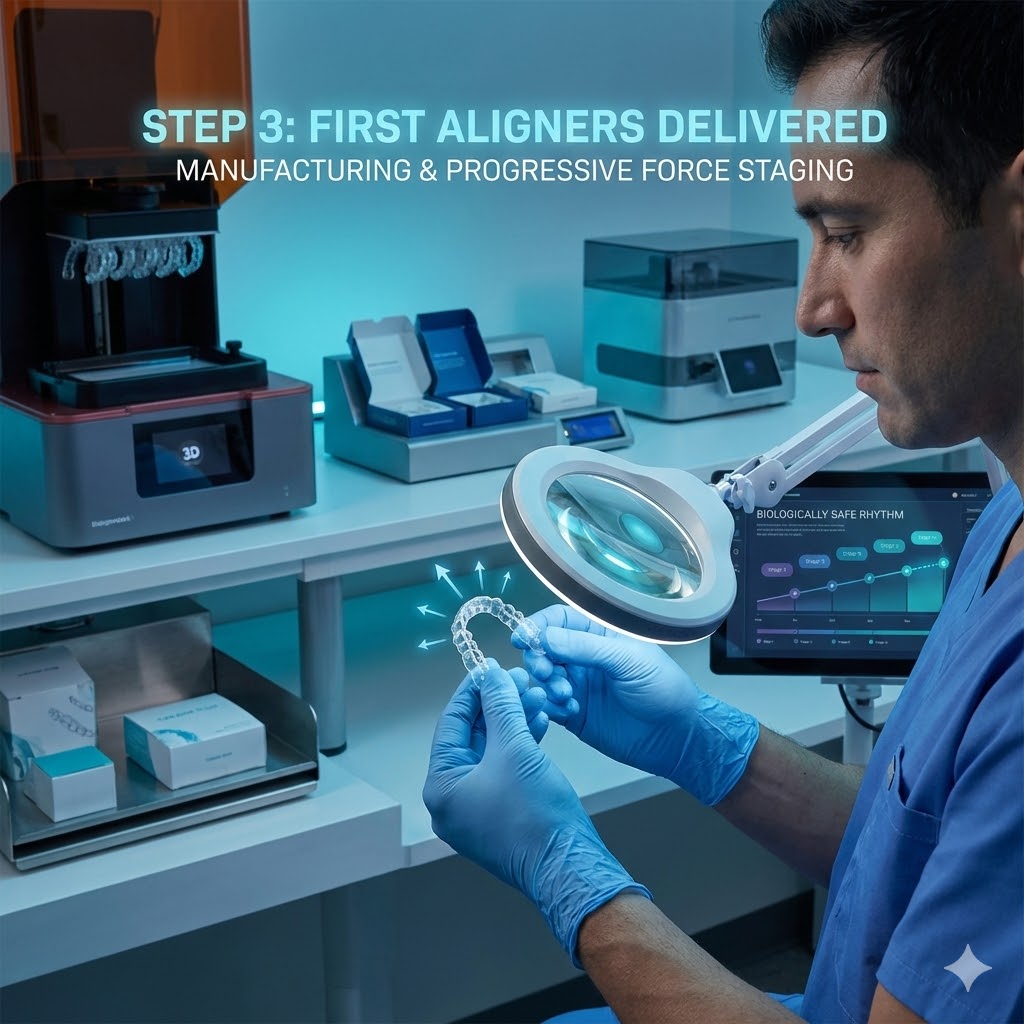
Step 3 – First Aligners Delivered
-
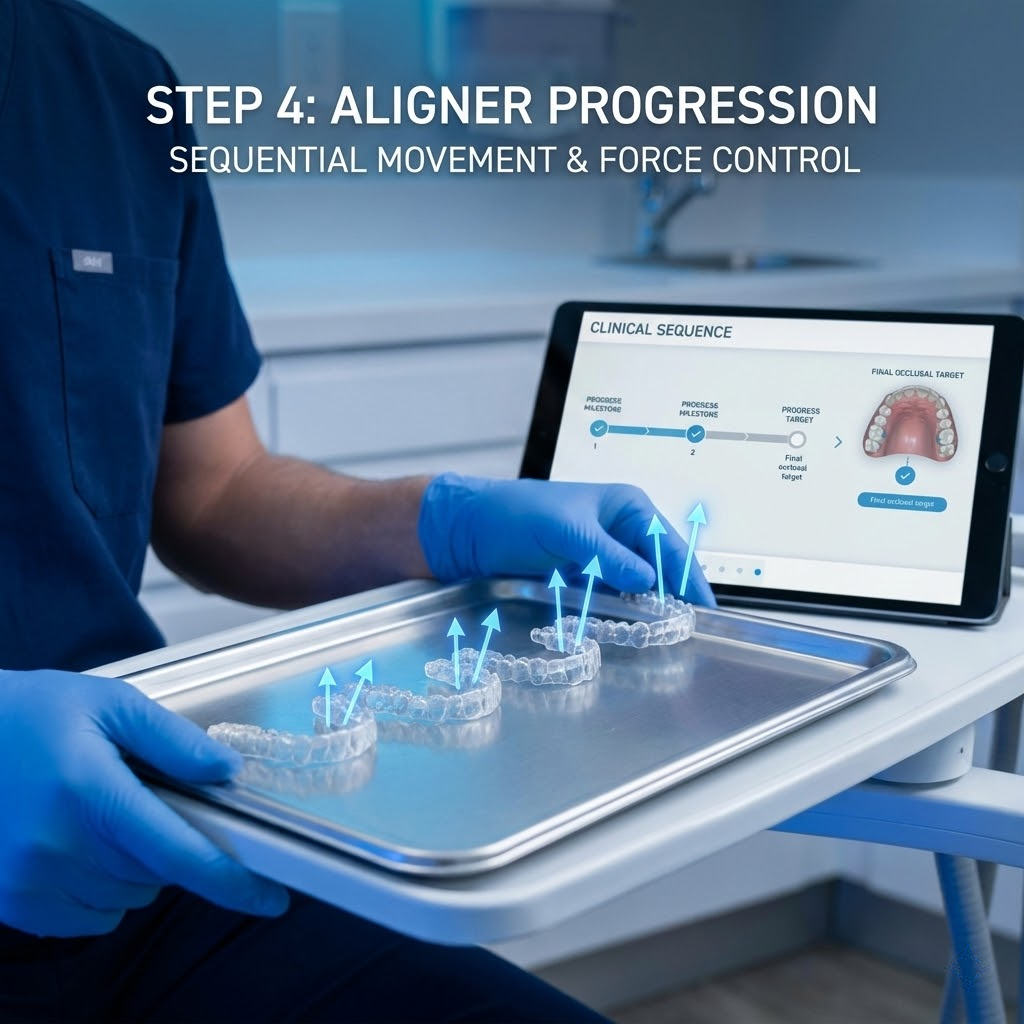
Step 4 – Aligner Progression
-
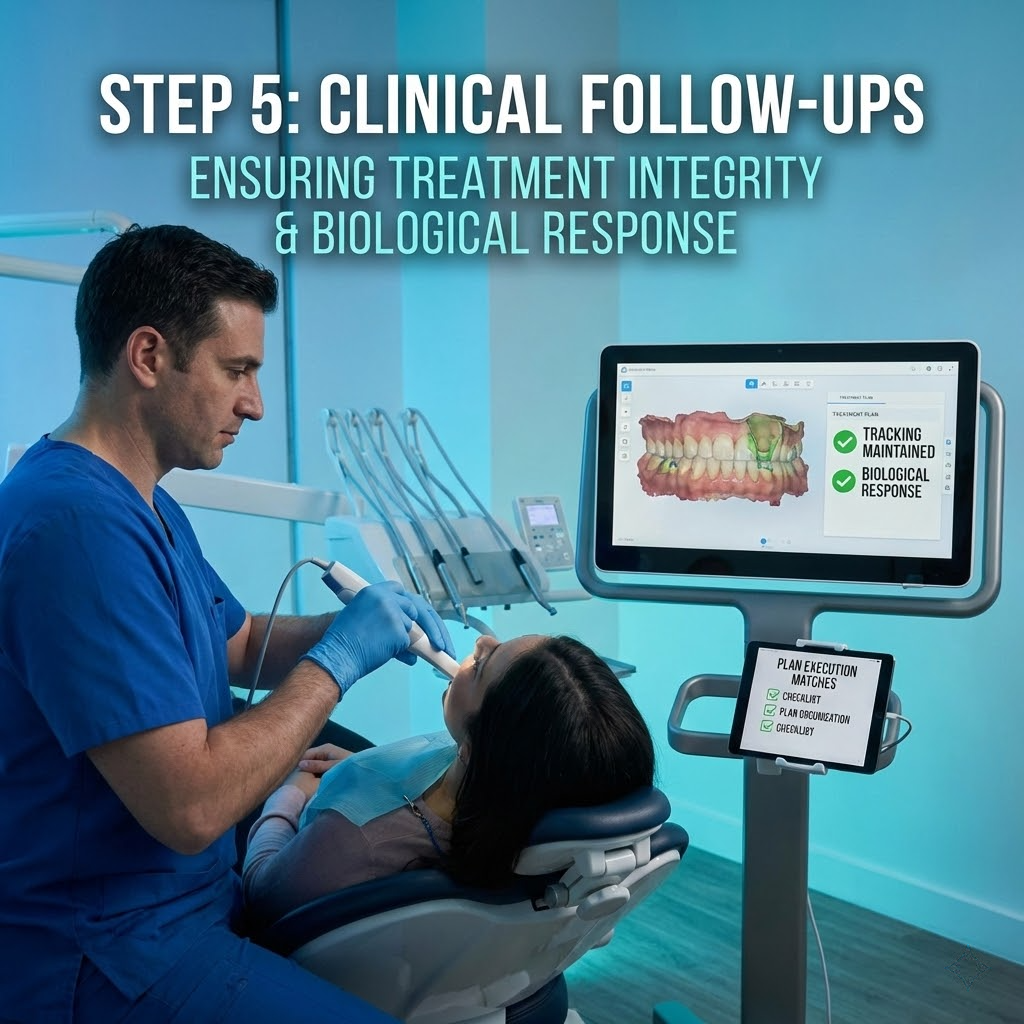
Step 5 – Clinical Follow-Ups
-
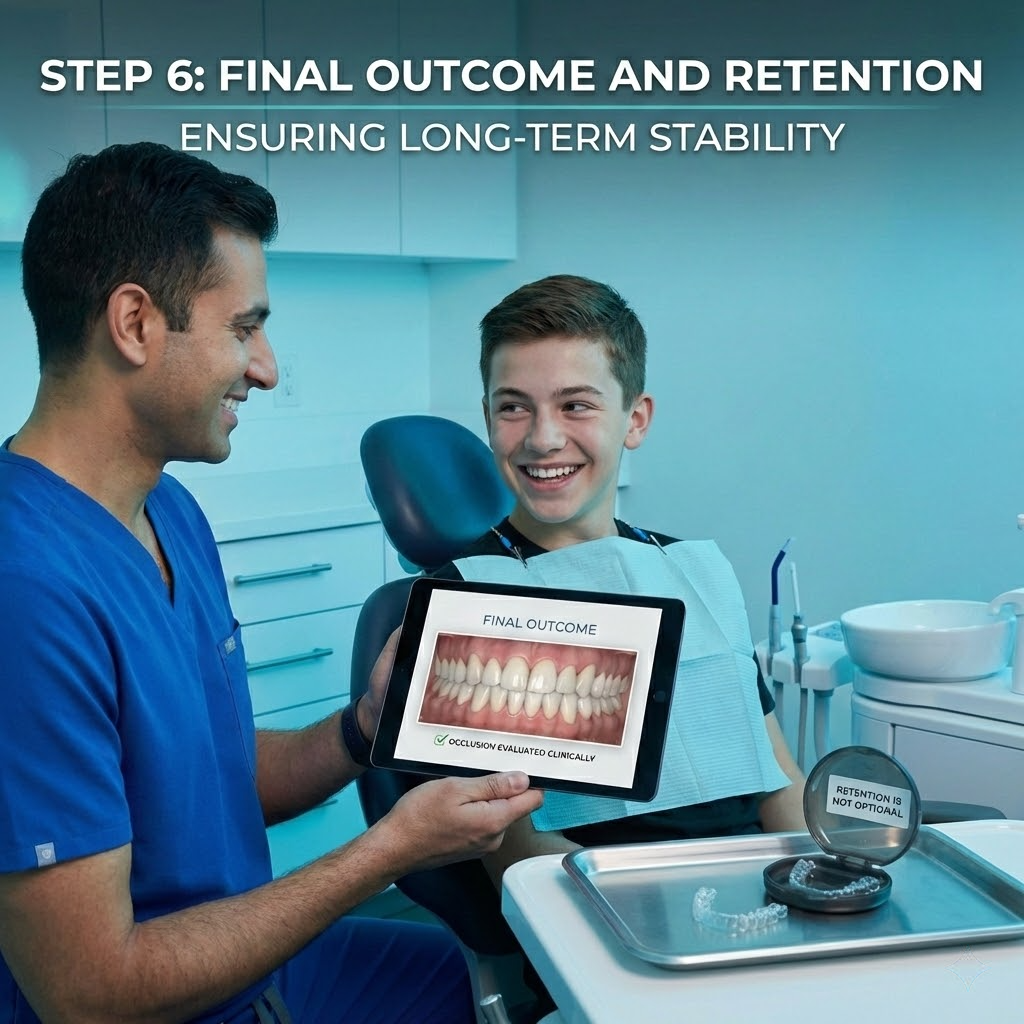
Step 6 – Final Outcome and Retention
Step 1 – Clinical Consultation
Treatment begins with a licensed dentist or orthodontist evaluating the case. Records typically include:
-
Intraoral scans or impressions.
-
X-rays or CBCT (when indicated).
-
Intraoral and extraoral photographs.
Goal: Determine case suitability and biomechanical complexity.
Step 2 – Treatment Planning
Using clinical records, a custom aligner plan is developed, defining:
-
Movement sequence.
-
Force strategy.
-
Space management (IPR, expansion, staging).
-
Biological limits of movement.
The digital setup is a clinical hypothesis, not a guarantee.
Step 3 – First Aligners Delivered
After plan approval, the first series of aligners is manufactured. Each aligner is designed to:
-
Apply specific force patterns.
-
Stage the teeth for the next movement.
-
Maintain progressive, controlled motion.
Wearing time per aligner follows a biologically safe rhythm, not arbitrary cycles.
Step 4 – Aligner Progression
As the case advances, aligners are changed according to the clinical sequence. Each aligner:
-
Builds upon prior movement.
-
Adjusts force magnitude and direction.
-
Progresses toward the final occlusal target.
Predictable treatment requires consistent wear and planned force control.
Step 5 – Clinical Follow-Ups
Routine check-ins ensure:
-
Tracking is maintained
-
Biological response is within expectations
-
Plan execution matches the clinical design
-
Adjustments are made only when necessary
This phase safeguards treatment integrity.
Step 6 – Final Outcome and Retention
Once movements are complete:
-
Teeth are positioned as planned
-
Occlusion is evaluated clinically
-
Retainers are prescribed to maintain outcomes
Retention is not optional—it is the final clinical phase, ensuring long-term stability.